
You’re the one people call. You handle the paperwork, remember what everyone needs, and show up even when you’re running on empty. People tell you, “I don’t know how you do it.” And you do it, every time.
Then someone asks how you’re really doing, and your chest tightens. You say “good, just busy.” Someone offers to help, and you hear yourself say “no, I’ve got it.” It isn’t that you don’t want support. Letting someone in just feels like more than you can afford.
If that sounds familiar, nothing is wrong with you. This is one of the most common patterns in people who grew up carrying more than their share.
Where “the strong one” comes from
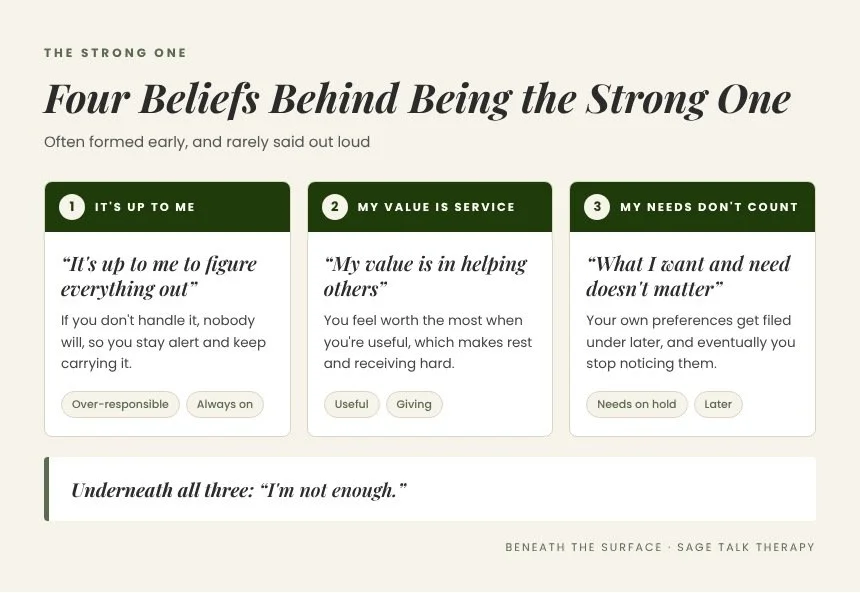
Being the strong one usually isn’t just a personality. It’s a role you took on, and it tends to come with beliefs that run quietly in the background:
It’s up to me to figure everything out.
My value is in helping and serving other people.
What I want, think, and need doesn’t matter.
I’m not enough.
That last one often keeps the other three going. If you can only earn your place by being useful, there’s never a moment where it’s enough.
These beliefs rarely come from nowhere. For many people they formed early: the oldest daughter who helped raise her siblings, the first-generation kid who translated at the bank and the doctor’s office, the child of a parent who was overwhelmed and needed you to be easy. In many families, including many Latino families, being dependable is a real expression of love and pride, and that’s worth honoring. The trouble starts when dependable becomes the only way you’re allowed to exist.
Why closeness can feel unsafe
Closeness asks for exactly what those beliefs rule out: needing something, saying what you want, being seen when you aren’t useful. So a part of you treats it as a risk. It isn’t that you don’t want connection. It’s that connection can feel like breaking the rules that kept things steady.
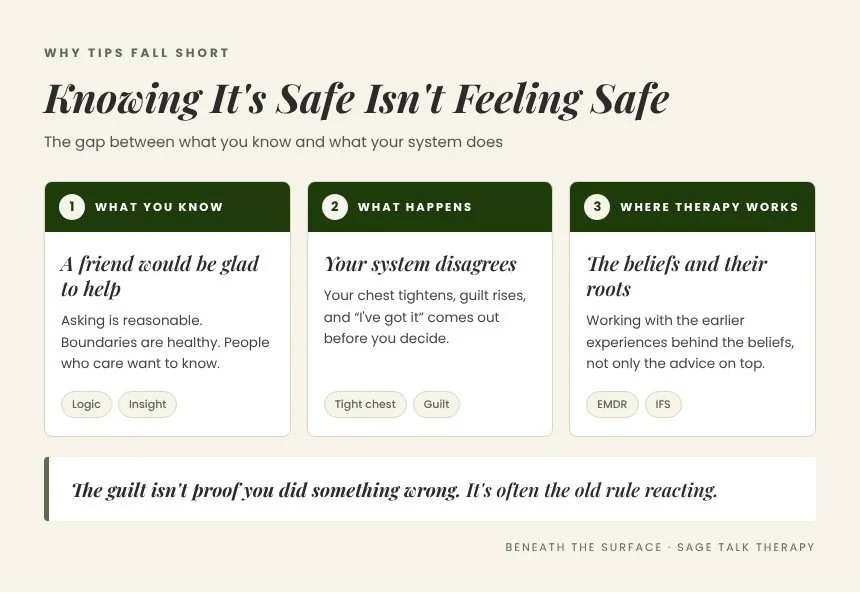
That’s also why the usual advice doesn’t land. “Just be more vulnerable” and “ask for help” assume the problem is not knowing what to do. Most strong ones know exactly what to do. They can tell you a friend would be glad to help, and still feel their chest tighten when they pick up the phone. Knowing something is safe and feeling safe are two different things, and tips only reach the first.
Where the guilt comes from
If you’ve ever set a boundary and then spent the evening feeling guilty or ashamed, you’ve seen this up close. That guilt isn’t proof you did something wrong. It’s often the old belief reacting: if my value is to serve, then saying no must mean I’ve failed. This is the same thread that runs through people-pleasing, where saying no can feel like a threat. The boundary was reasonable. The guilt came from the rule.
How therapy works with this
In my work, I use EMDR to help people process the earlier experiences that these beliefs grew out of: being told not to make things harder, years of being the responsible one, the first time your needs were treated like a burden. The goal isn’t to argue you out of a belief. It’s to work with the memories and the body’s response around them, so the belief can lose some of its hold.
I also use IFS to get to know the part of you that took on the job of handling everything. That part isn’t a problem to get rid of. It learned to do this for good reasons, and it’s often exhausted. In therapy, it gets someone to share the load with.
One thing I see often with strong ones is that you show up and try to be a good client. You come prepared, stay composed, and worry about taking up too much time. That isn’t a failure. It usually means the pattern is already in the room, which means we get to work with it as it happens.
What people often notice first
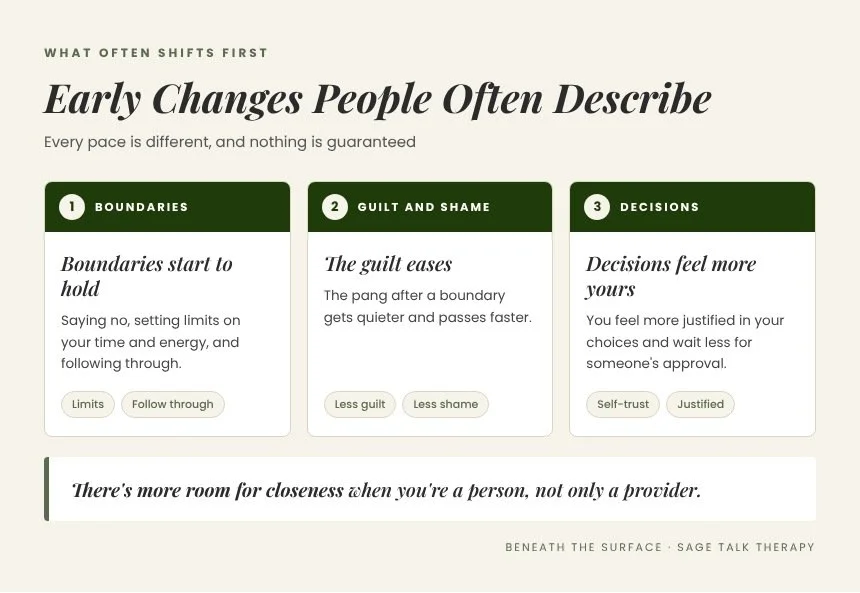
Everyone’s pace is different, and I can’t promise a particular outcome. But the first shifts clients often describe are practical. They start putting boundaries in place. The guilt and shame that used to follow those boundaries begin to ease, and they feel more justified in their decisions instead of waiting for someone to approve them.
That matters for closeness, too. When you’re allowed to be a person and not only a provider, there’s more room for people to know you.
It doesn’t have to stay this way
Being the strong one was something you learned, and what you learned can change. You can set a boundary and not spend the night feeling guilty. You can let someone carry something and notice that you’re still okay. You can be known by the people in your life, not only needed by them.
If this resonates
If you’ve been holding everything together for a long time, reaching out can be the first thing you do for yourself in a while. I work with adults virtually across New York and Connecticut, and in-person in Westchester, NY. If what you have read here describes something you have been living with, I would welcome the conversation.
Learn more about Intergenerational Trauma.
Learn more about EMDR Intensives.
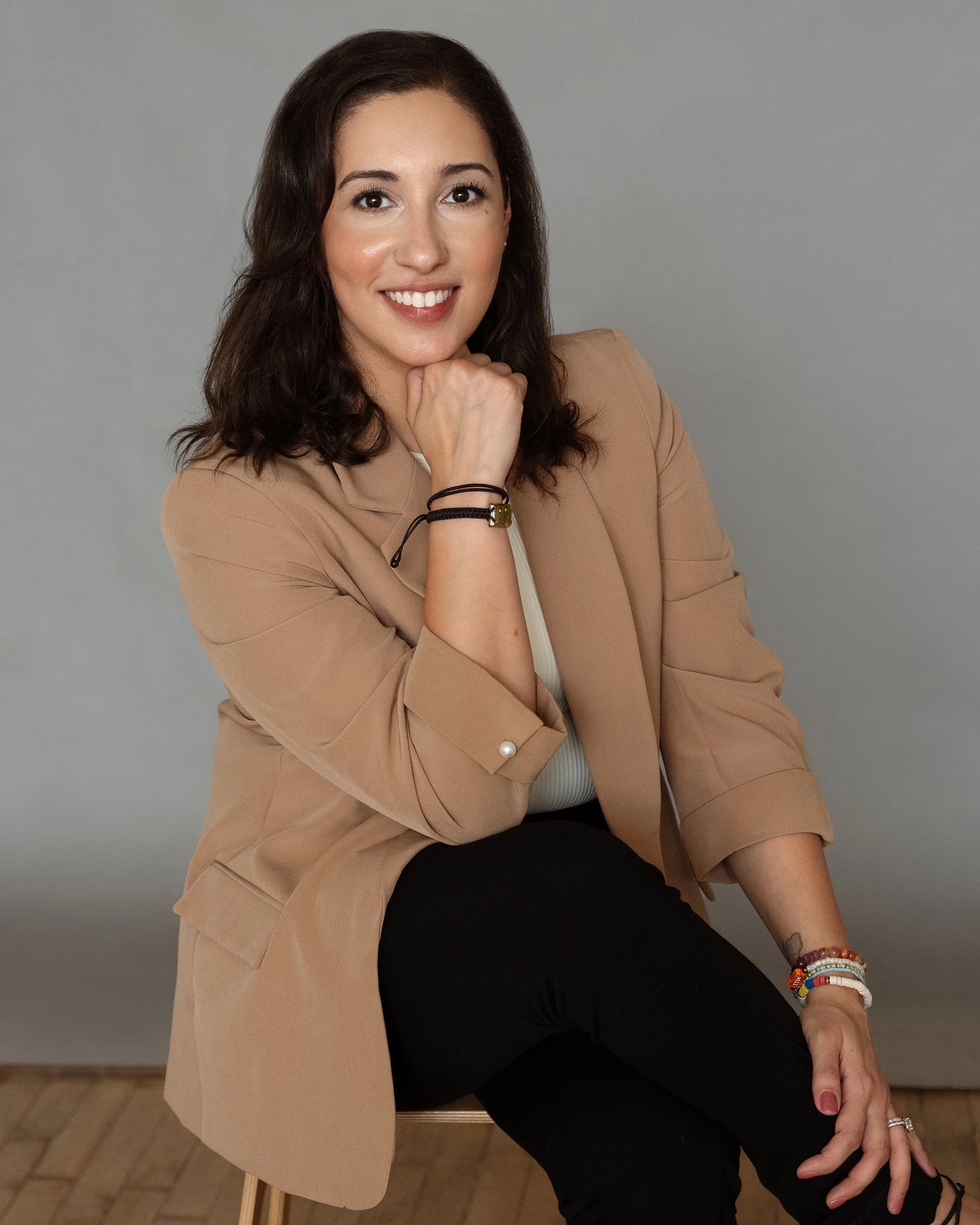
Dadiana Lopez
LCSW · Anxiety & Trauma Therapist · EMDR Specialist
Dadiana Lopez is a Licensed Clinical Social Worker and EMDR therapist based in White Plains, NY. She specializes in anxiety, trauma, PTSD, and the patterns that form in the wake of both — including people-pleasing, perfectionism, and burnout. She sees clients in person in Westchester and online throughout New York and Connecticut.
Seeing clients in-person in White Plains, NY and online throughout New York and Connecticut.