
When "Family Is Family No Matter What" Isn't Safe: Estrangement in Immigrant Households
If you grew up hearing that family comes first, stepping back from someone who hurt you can feel like betrayal. This post looks at why estrangement carries extra weight in immigrant households, and why loyalty and safety are not the same thing.
The Link Between Childhood Experiences and Adult Anxiety Nobody Talks About
Most people with anxiety focus on managing it in the present — without ever asking where it came from. This post explores the well-researched but rarely discussed connection between childhood experiences and adult anxiety, and what it means for how you approach healing.
What Trauma Brings Into a Relationship — And What Trauma-Informed Couples Therapy Does About It
Couples therapy that focuses only on communication skills often misses what's actually driving the conflict. When trauma is in the room, the patterns are deeper than technique can reach. This post explains what trauma brings into relationships and what trauma-informed couples therapy does differently.
Why Trauma Lives in the Body — And What That Means for Healing
Trauma is not just a mental experience. It lives in the body as chronic tension, disrupted breathing, nervous system patterns that fire before thought. This post explains why that happens and what it means for how healing actually works.
What Actually Happens in Your Brain During EMDR (In Plain Language)
EMDR is one of the most researched trauma therapies in the world. But most people who experience it have no real understanding of what's happening in their brain when it works. This post explains the neuroscience of EMDR clearly, without oversimplifying or overcomplicating it.
High-Functioning Burnout: How to Be Completely Depleted While Still Appearing Fine
High-functioning burnout doesn't look like burnout. It looks like still performing, still meeting every obligation, still holding everything together. That's exactly what makes it so dangerous. This post explains what it is, why it stays hidden so long, and what recovery actually requires.
Why Your Brain Won't Stop Spinning at Night (And What to Do About It)
The tips haven't worked. The lavender didn't work. The weighted blanket didn't work. That's because nighttime overthinking isn't primarily a sleep problem — it's an anxiety and nervous system problem. This post explains what's actually happening when your brain won't stop at night and what genuinely addresses it.
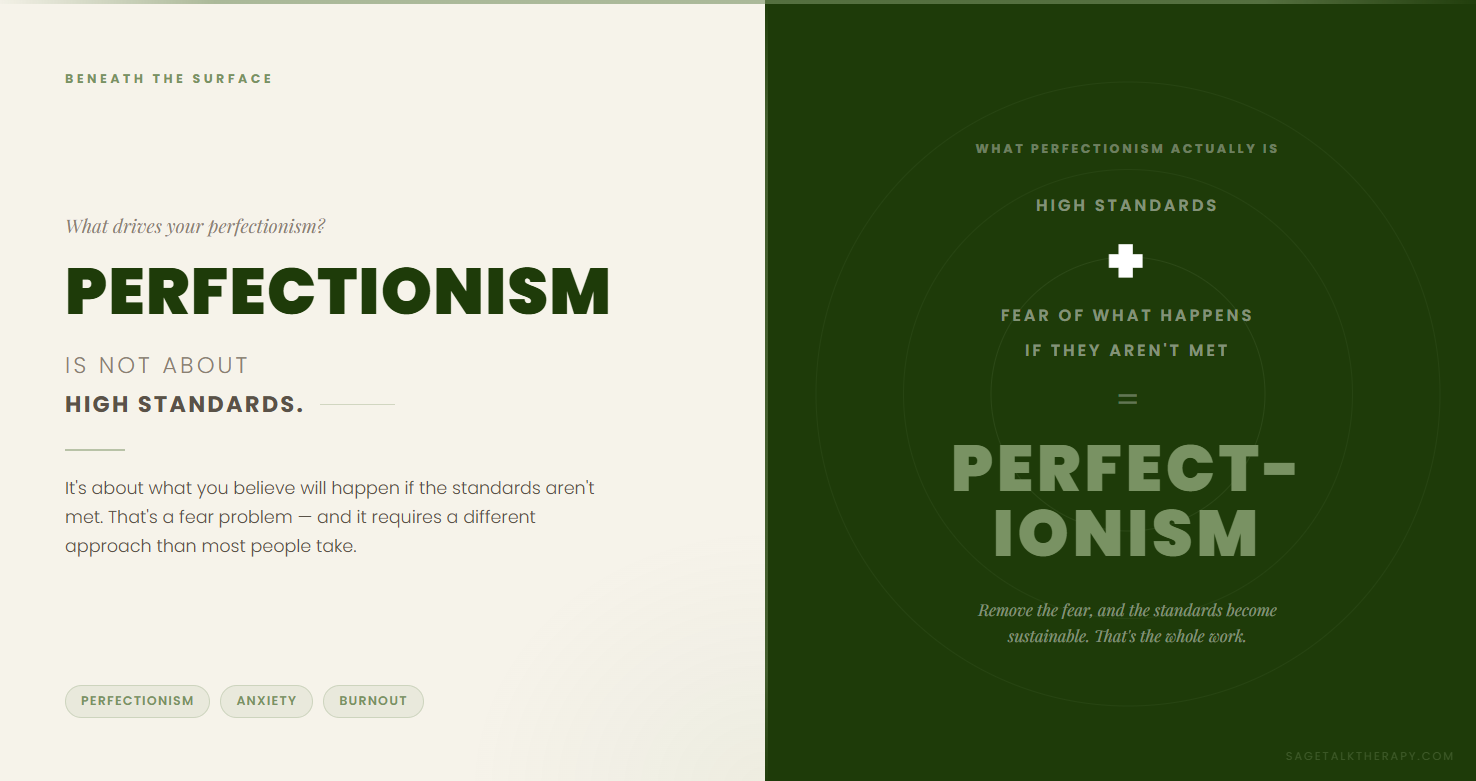
Perfectionism Is Not About High Standards. It's About Fear.
Most people think of perfectionism as a drive for excellence. What it actually is, for most people who struggle with it, is a fear-management system. This post explains the fear underneath the standards — and what it actually takes to address it at the root.
The Fawn Response: Why People-Pleasing Is a Trauma Response, Not a Personality Type
People-pleasing is widely misunderstood as a personality trait. For many people it is the fawn response — the fourth trauma response, activated when fight, flight, and freeze aren't safe options. This post explains the fawn response clearly, how it develops, and what trauma-informed therapy does to address it at the root.
You Didn’t Choose What You Inherited. Here’s How To Start Changing It.
The anxiety, the patterns, the ways of relating that feel wired in — some of what you carry didn't start with you. Intergenerational trauma passes through families in ways that go deeper than stories or memories. This post explains the science, the experience, and what it actually takes to start changing it.
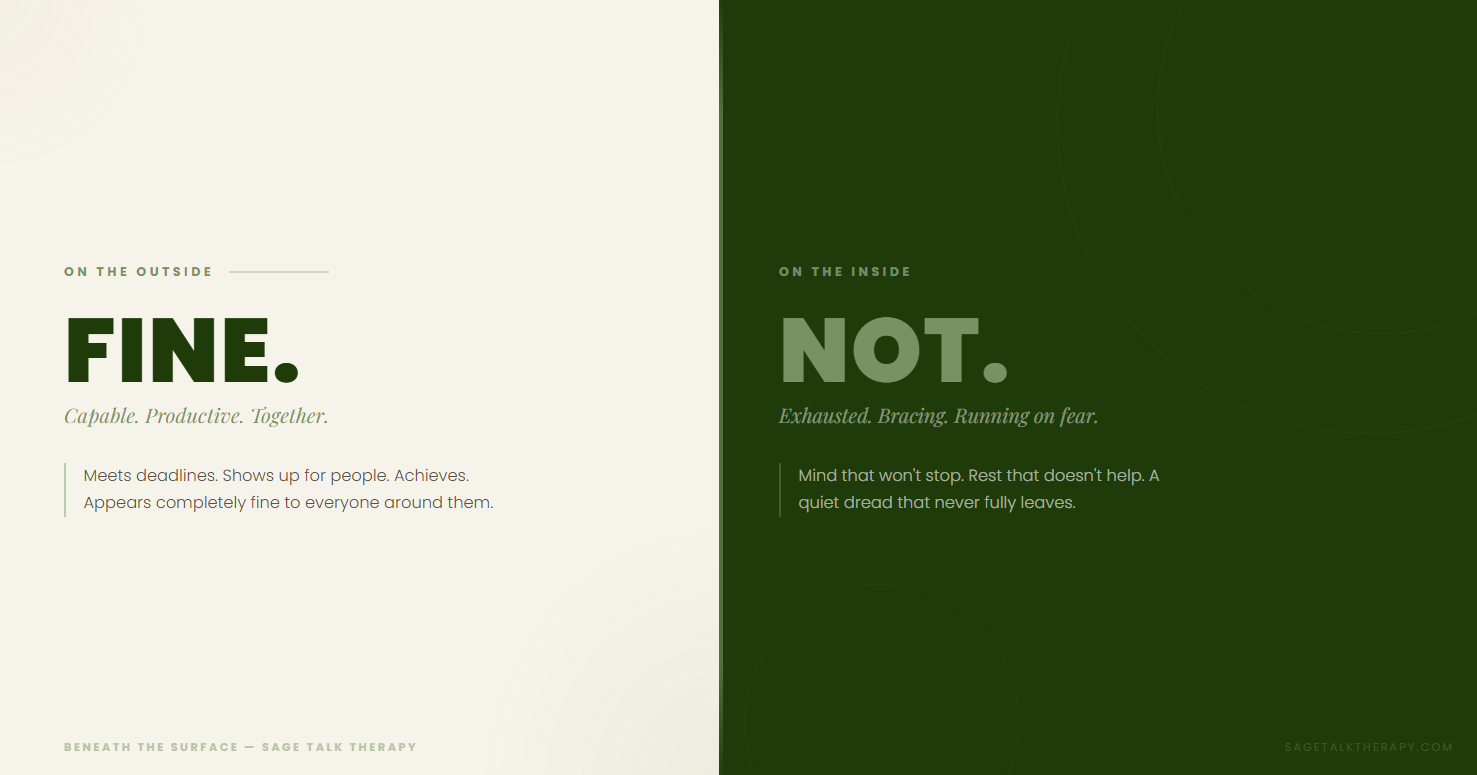
What High-Functioning Anxiety Actually Looks Like (And Why It's So Easy to Miss)
High-functioning anxiety is one of the most common, and most commonly missed, forms of anxiety. It doesn't look like struggling. It looks like succeeding. Here's what it actually feels like from the inside, why it's so hard to recognize, and what treating it well requires.
Signs Your Nervous System is Dysregulated (and What to do About It)
Anxiety that won't quit. Exhaustion that sleep doesn't fix. Reactions that surprise even you. These aren't character flaws — they're signs your nervous system has been running in survival mode for too long.
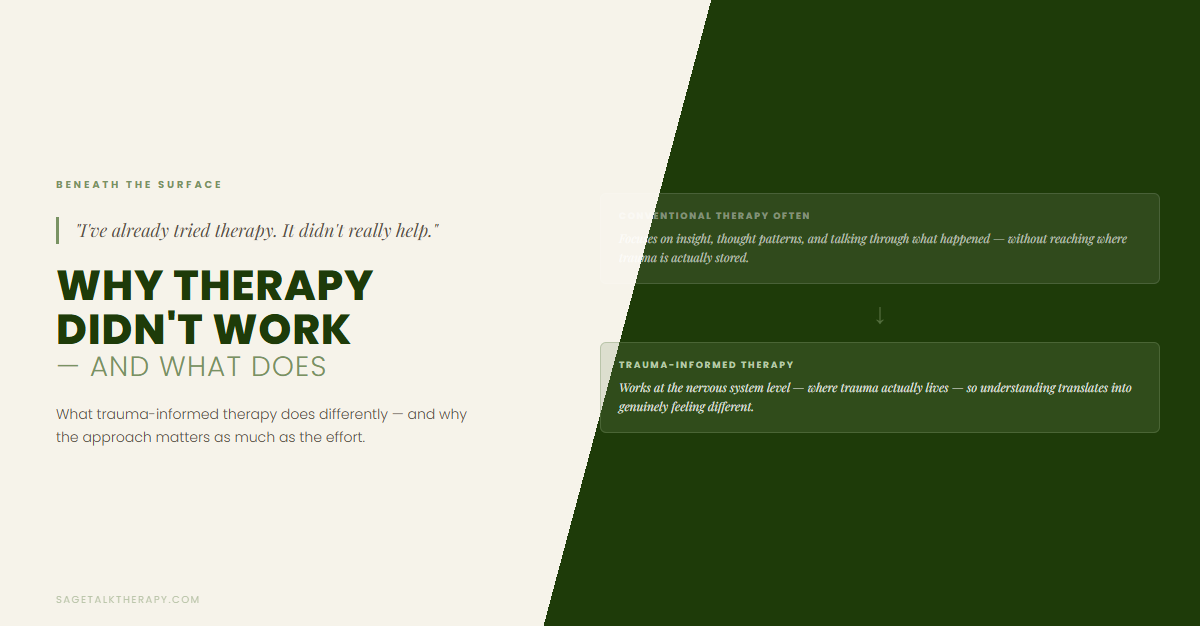
Why Therapy Didn’t Work Before
Many people who come to trauma-informed therapy have already tried therapy before. They gained insight, understood their patterns, and still didn't feel different. This post explains why — and what a trauma-informed, nervous-system-focused approach does that conventional therapy often can't.
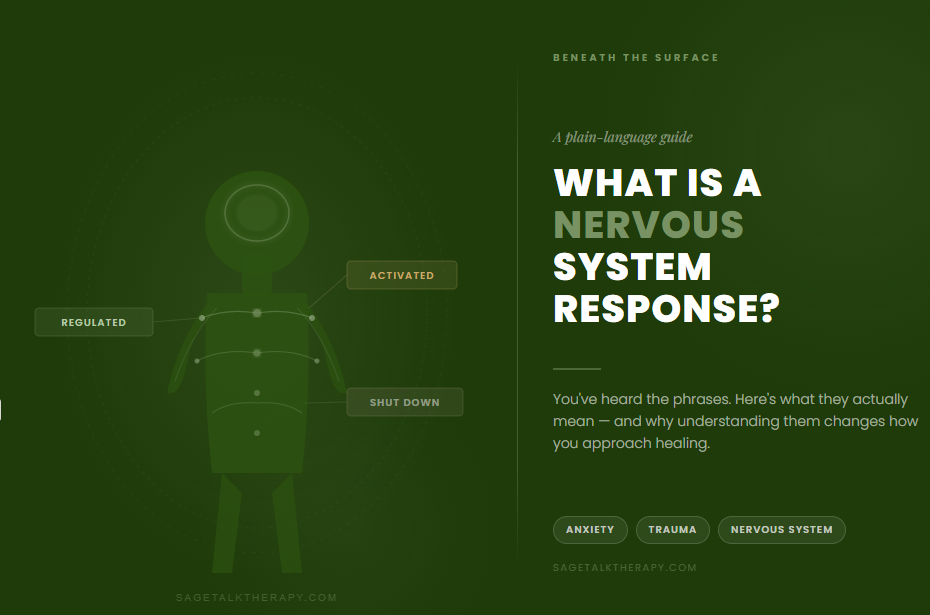
What Is a Nervous System Response? A Plain-Language Explainer
"Regulate your nervous system." "Your body is in fight-or-flight." You've heard these phrases — but what do they actually mean? This plain-language explainer breaks down nervous system responses, why they matter for anxiety and trauma, and how therapy actually changes them.
Trauma vs. Anxiety: How to tell the difference and what to do next
You've been telling yourself it's anxiety. But if the worry doesn't stop no matter what you try, something deeper might be going on. Trauma and anxiety share a lot of the same symptoms — here's how to tell the difference and why it matters for your treatment.